26 juli 2021
Selling Art Online: 10 Tips
Art can reach everyone. Selling it online takes time, but it can greatly expand your opportunities.
Offering your work online is known as e-commerce. It allows art lovers to find work they love at a price they are willing to pay, without travelling.
Online art sales were forecast to reach €7.85 million in 2024. For an artist seeking an audience, presenting work online can be an effective way to reach buyers.
There are several routes to selling art online. Alongside a personal website, you can work with one or two major online galleries.
Here are some tips to get started. Afterwards, read my article about online galleries to explore possible partners.
1. Define Your Niche
Whether you are an artist or an art dealer, start with a clear identity and recognisable approach. Organise your work into a coherent collection or several collections grouped by style.
Remember that you need to communicate why someone should buy your art. You are responsible for its marketing, so be open, honest and confident. It is easier to convey enthusiasm when you love the work you sell.
You might focus on:
- A particular medium, such as oils, watercolour, gouache or acrylic;
- A style such as photorealism, or a theme such as fantasy or the Old Masters.
“Museum gift shops demonstrate how paintings can appear on everything from scarves to packaging and umbrellas.”
2. Choose Your Products
As an artist, you are also an entrepreneur. An original artwork can become a greeting card or be printed on clothing and other products. Some websites handle production and sales for you, paying a percentage or a fixed amount whenever a product featuring your work sells.
Look at major museum gift shops: paintings are reproduced on scarves, packaging, umbrellas and many other items.
Using different formats can expand your online sales. A single painting that captures your artistic identity can generate income beyond the sale of the original.
Selling prints is a straightforward starting point for two-dimensional work. Choose the print process and paper quality, and decide whether to offer framing. Working with a printing company may reduce costs.
3. Set Your Limits
Reproductions can provide income, but consider whether limited editions would suit your work better.
Limited print runs create scarcity. Even online, art lovers may be looking for something special.
Research your prices. When starting out, avoid pricing yourself out of the market:
- Consider your experience, or that of the artist you represent. Prices for a recent graduate should reflect that stage of development;
- Include the time spent creating the artwork in your pricing. The return on your investment matters;
- Compare prices charged by artists at a similar stage.
An Example of Pricing an Original Artwork
Suppose you want to earn €25 an hour. Your fixed expenses are €1,000 a month, your painting takes 20 hours, and materials including the support, paint and brushes cost €50. Drying time is excluded.
20 hours × €25 = €500. Adding €50 for materials gives €550, before allocating fixed expenses and any applicable VAT. Your final selling price also needs to cover those overheads.
A gallery commonly takes a substantial commission. With a 50% commission, you would need to double your required net amount to determine the selling price.
A separate blog includes a calculator for pricing your artwork.
How Much of That Amount Do You Keep?
As well as fixed expenses, remember any applicable VAT, Dutch healthcare-insurance contributions and income tax.
You may also need business insurance, which can form part of your deductible business expenses.
Once you have listed these costs, you can estimate the sales and number of paintings needed to earn your monthly income.
Relatively few artists live entirely from sales of original paintings. Alongside teaching, selling other products online can therefore be an important source of income.
4. Build Your Own Website
An artist’s website provides a home for selling art online.
Your personal website puts your work at the centre and lets you present it on your own terms. The homepage can become a personalised gallery devoted to your art.
Choose a website builder that helps you get started efficiently, and create a design suited to your style.
Many providers offer free templates as a starting point for an online shop.
Adding a shop transforms a website from a showcase into a place where visitors can buy.
When starting out with limited income, a low-cost option may be useful. The original article mentions Exto.nl, including its free website option and a sales option priced at €4 a month.
Experiment with a layout that complements your art, while keeping the work itself prominent. A simple white gallery background can be effective.
Make sure you:
- Choose a suitable domain name. Your full name is a simple, effective option;
- Treat your online gallery like a shop window: clear, organised and memorable;
- Link your professional social media accounts to your website.
5. Social Media
Professional social profiles give you more control over how your art reaches people. Platforms such as Instagram and Pinterest can introduce your work to audiences beyond your website.
Show the person behind the art. Behind-the-scenes content helps people connect with you and stay interested.
A loyal following can build enthusiasm for new work, strengthen your identity and encourage repeat purchases.
Social media also makes it easier to connect with other artists and makers.
When developing a profile:
- Keep product photography consistent and professional, even when communicating personally;
- Show the artist or artists behind the work;
- Keep your sales goals in mind and treat social platforms as extensions of your shop window.
6. Take Good Photographs
Photography may be the most important part of selling art online.
Poor photographs can undermine your hard work, unless that visual quality is intentionally part of the artwork.
If photography is not your strength, consider a professional who understands photographing paintings or capturing fine detail.
Every online product should be photographed clearly and accurately.
I plan to share product-photography tips in a future blog. Subscribe to my newsletter to hear about it.
As your audience grows, you may also sell through Instagram or an international gallery website. Keep the quality of your presentation consistent everywhere.
Show Your Best Work:
- Start with a straight-on view of the complete artwork, followed by details;
- Show the artwork in context, helping people imagine it on a wall, shelf or mantelpiece;
- Include close-ups of texture, as paintings can otherwise appear flat online.
7. Organise the Logistics
Plan packing and shipping before you begin selling. Make sure the entire process works reliably.
For prints and merchandise, a print-on-demand partner can handle production and fulfilment while you manage the sale.
You can also manage shipping yourself. Depending on sales volume, working with a logistics company may be economical.
Artists have published useful packing and shipping guides online. Consult them when planning how to protect your work.
In a future blog, I will explain packing and shipping step by step to help your creations travel safely.
The three main principles are:
- Protect the artwork: damage in transit is deeply disappointing;
- Stay professional throughout, from your workspace to the customer’s door;
- Aim for efficiency, economy and environmental care.
8. Protect Your Work
Copying is an unfortunate possibility when sharing or selling art online. Some artists regard it as an unwelcome drawback.
There are measures you can take to discourage copyright infringement, including making unauthorised reproduction harder.
Watermarks and lower-resolution images are options, but they can also prevent customers from seeing your work clearly. Determined copyists may not care about image quality.
A direct approach and a loyal audience can sometimes help. Even large retailers may have copied artwork, and it may be possible to persuade them to withdraw the products.
- Contact the person or company calmly and provide evidence that the work is yours;
- Begin privately: public criticism on social media is not always the best first step;
- Explore whether Pictoright can help with a claim.
9. Work with Physical Galleries
Traditional galleries still have value. However good your photographs, seeing the original is a different experience.
Viewing art in person engages the senses. Even the smell of oil paint can evoke memories.
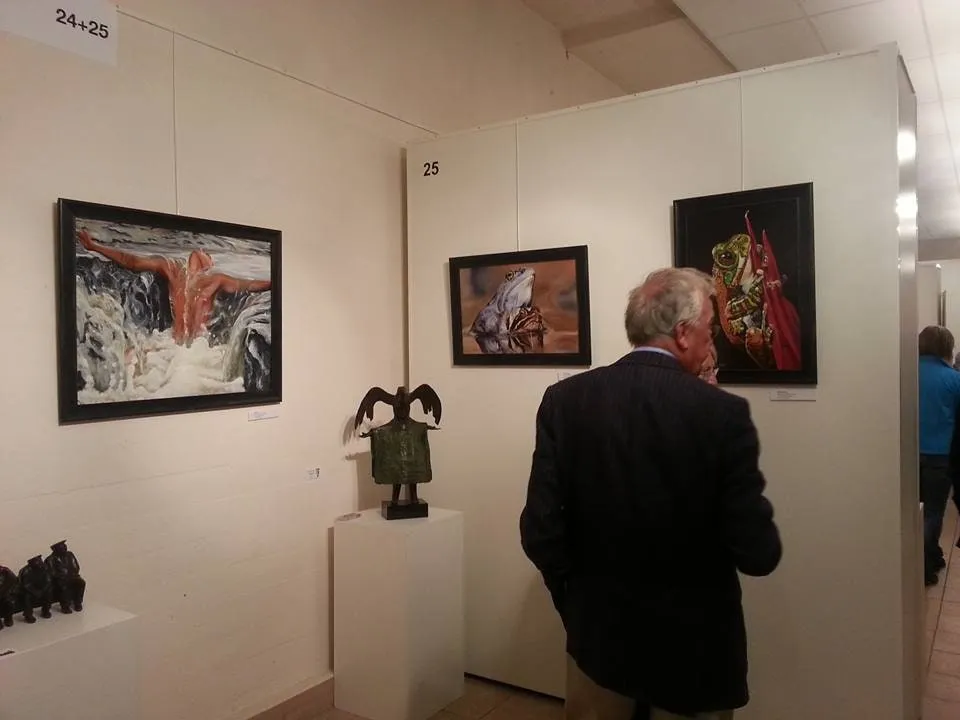
Relationships with physical galleries can bring exhibitions, art fairs and more personal connections with potential buyers.
Promote upcoming exhibitions through your social channels.
Use what you know about your audience to identify suitable places to show your work.
When approaching a gallery:
- Check whether it represents your kind of art;
- Make a professional approach rather than sending a private Instagram message;
- Research the commission and consider whether the arrangement makes financial sense.
10. Work with Online Galleries
Online galleries vary considerably.
If you are considering one alongside your own shop, research it carefully.
A larger gallery can introduce your work to a broad audience of collectors.
It can also connect you with like-minded artists.
Like traditional galleries, many charge commission. Rates vary, and additional fees may apply.
Be selective about the quality of the work shown alongside yours. Large marketplaces contain a wide range of standards.